Ever wonder why some Charleston homes stop you in your tracks while others simply feel pleasant? In this city, the most admired houses do more than look beautiful. They reflect centuries of local design shaped by narrow lots, coastal weather, formal town living, and a deep commitment to preservation. If you are buying, selling, or simply learning the market, understanding these architectural styles can help you see Charleston homes with a sharper eye. Let’s dive in.
Why Charleston Homes Feel So Distinct
Charleston’s architectural identity is not built around one single style. It is a layered mix of colonial, Federal, Greek Revival, cottage, and coastal vernacular influences that grew out of the city’s history as a major port and its long-standing preservation culture.
That preservation culture still matters today. Charleston’s Board of Architectural Review has been in place since 1931, and its work has helped keep many of the city’s defining features visible on the street, especially in historic districts.
What makes Charleston especially interesting is that style and floor plan are not always the same thing. A home may look Greek Revival or Italianate from the outside, while still following the interior layout of a Charleston single house.
Charleston Single Houses
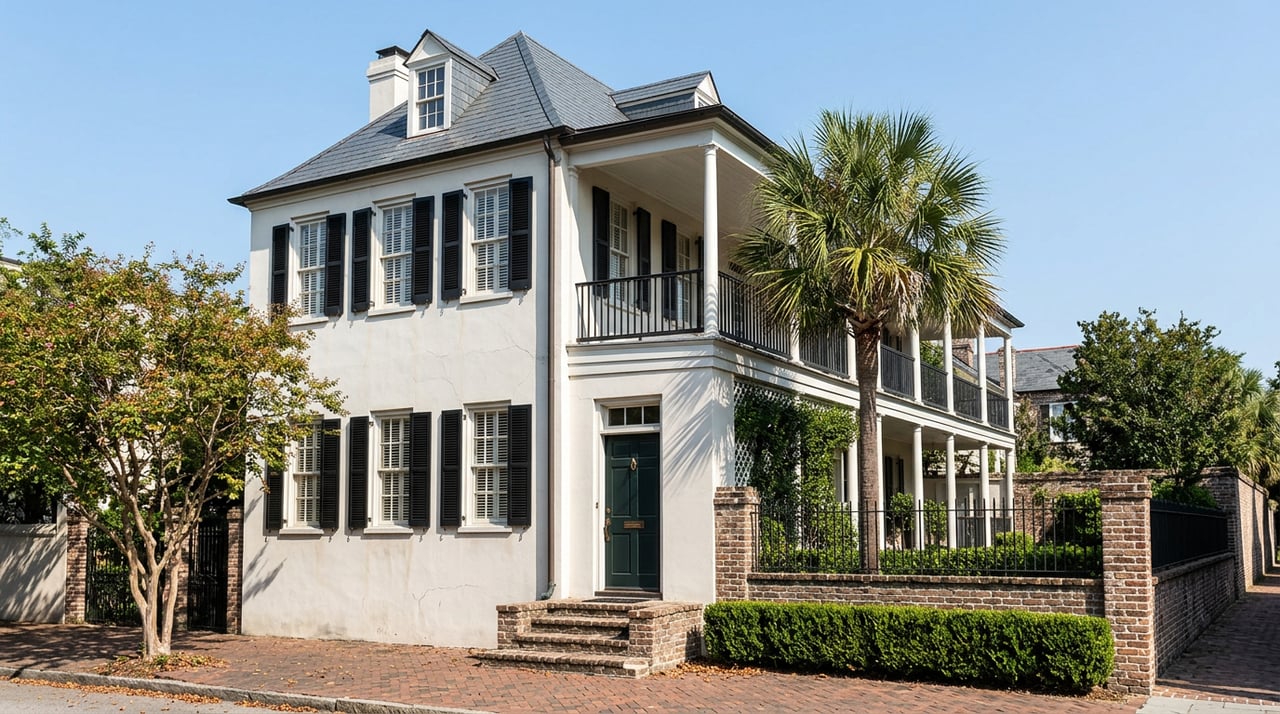
If one home type defines Charleston, it is the Charleston single house. This form is known for its narrow front facing the street, long side elevation, and side-hall entry, all shaped to fit tight urban lots.
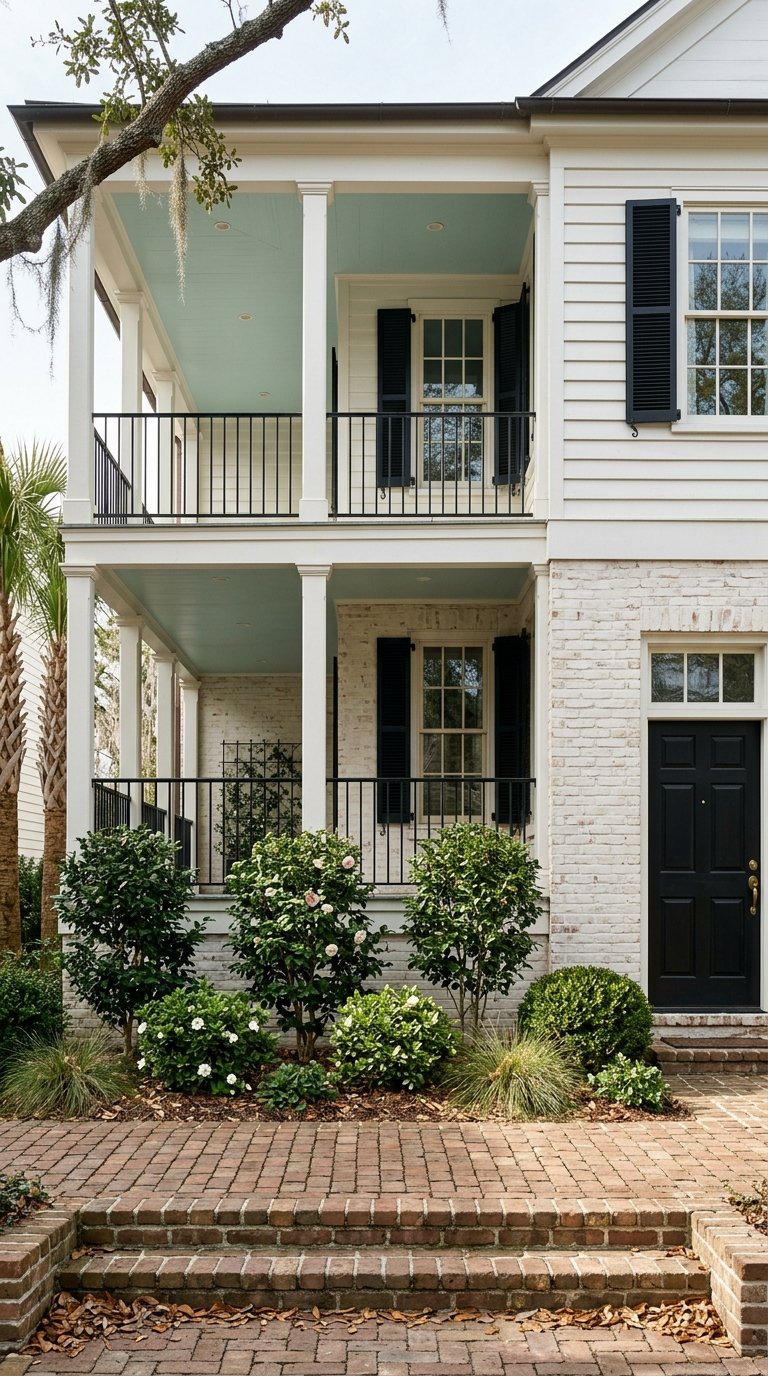
The design was practical as much as beautiful. Early versions were arranged to catch breezes, and later examples added side piazzas or double piazzas that brought shade, privacy, and outdoor living into daily life.
For many buyers, this is the house type that feels most unmistakably local. It offers strong character, efficient use of space, and a silhouette that remains one of Charleston’s most recognizable architectural signatures.
Why buyers love single houses
Buyers are often drawn to single houses for a few clear reasons:
- Iconic Charleston street presence
- Efficient layout on narrow lots
- Outdoor living through side piazzas
- Historic character that feels specific to place
The tradeoff is that these homes are often more vertical and narrow than broad and open. If you love connected porch space and historic charm, that can be part of the appeal.
Double Houses and Historic Townhomes
Charleston’s grander in-town residences often take the form of double houses or formal townhouses. These homes typically have a central hall with rooms on both sides, creating a more symmetrical and expansive interior arrangement.
This is the category that includes some of the city’s best-known historic houses. The Heyward-Washington House is a Georgian-style double house built in 1772, while the Nathaniel Russell House is one of Charleston’s finest early Federal homes, known for its shaped rooms, detailed plasterwork, formal gardens, and remarkable three-story staircase.
For today’s buyers, these homes often represent the most formal historic living experience Charleston offers. They tend to deliver symmetry, larger entertaining rooms, and a stronger sense of ceremony from the front door inward.
What sets these homes apart
Double houses and townhomes often stand out for their:
- Central-hall floor plans
- Formal entertaining spaces
- Grand staircases
- Strong street presence
- Garden-oriented layouts
These are often the homes buyers picture when they think of Charleston prestige. They can feel less casual than a single house, but they offer a rare combination of history, scale, and architectural presence.
Federal and Georgian Elegance
Georgian and Federal design play a major role in Charleston’s most admired homes. Georgian architecture is generally associated with symmetry and order, while Federal interiors often introduced more refined room shapes and decorative detail.
In Charleston, these styles are closely tied to the city’s historic urban fabric. They help explain why so many beloved homes feel balanced, formal, and carefully composed rather than overly ornate.
If you are drawn to classic proportion and graceful interiors, this is often the architectural language behind that reaction. In many cases, the appeal is not only beauty but also how well these homes carry Charleston’s civic and residential history.
Greek Revival After the 1838 Fire
Greek Revival became especially visible in Charleston after the 1838 fire, when parts of Ansonborough and nearby streets were rebuilt. The style brought a more classical and substantial look to the city, often with stronger monumentality than earlier house forms.
In residential settings, Greek Revival could be layered onto Charleston’s local house plans without losing the city’s porch-centered lifestyle. That is part of what makes Charleston architecture so fascinating. New exterior fashion often worked within familiar local forms.
For buyers and sellers alike, Greek Revival homes often read as dignified and established. They carry a formal presence while still fitting Charleston’s urban scale.
Cottages and Smaller Historic Homes
Charleston’s most loved homes are not all grand. Smaller historic houses, including Freedmen’s cottages and other cottage forms tied to the Lowcountry, are a key part of the city’s architectural story.
The Jackson Street Freedmen’s Cottages, built in the 1890s, are small one-story houses with gabled roofs and piazzas. The National Park Service describes most as roughly 300 to 500 square feet, and the type became a staple housing form in the city.
These homes matter because they show another side of Charleston living. Instead of grandeur, they offer compact scale, porch-centered design, and a more relaxed relationship to the outdoors.
Why cottage-style homes appeal
Many buyers respond to cottages because they offer:
- Manageable footprints
- Strong architectural charm
- Porches and piazzas
- A casual Lowcountry feel
They may be smaller, but they are not lesser. In Charleston, smaller historic homes often carry just as much identity as larger landmark properties.
Lowcountry Coastal Influence
Charleston architecture has always been shaped by climate. Across the broader Lowcountry, traditional houses often feature verandas and open interiors designed to support airflow and outdoor living.
That influence helps explain why porches matter so much here. Whether you are looking at a peninsula single house or a coastal cottage, many of Charleston’s most appealing homes are designed to soften the boundary between inside and outside.
This is one reason Charleston homes tend to feel livable as well as beautiful. Their appeal is not just visual. It is rooted in how the houses respond to daily life in a warm, humid coastal setting.
Newer Homes With Charleston Roots
Not every beloved Charleston-area home is centuries old. Many newer homes borrow from historic Lowcountry precedents through broad porches, elevated main floors, simplified massing, and open layouts that support indoor-outdoor living.
In historic districts, visible exterior changes are still subject to review by the Board of Architectural Review. That means newer work near the peninsula often needs to respect scale, massing, and materials even when the interior is fully modern.
For design-minded buyers, this can be an appealing middle ground. You may get the Charleston look and coastal design language while also enjoying a more contemporary layout and systems.
The Social History Behind Admired Homes
Charleston’s historic homes also carry complex social history, and that context matters. Properties such as the Nathaniel Russell House and Aiken-Rhett House included kitchen houses, work yards, and other dependencies tied to enslaved labor.
Any conversation about Charleston’s admired architecture should make room for that reality. These homes are important not only for their design, but also for what they reveal about the people, systems, and labor that shaped the city.
Understanding that fuller story often gives buyers and sellers a more meaningful connection to Charleston’s historic housing stock. Beauty and history are part of the same conversation here.
What Buyers Often Notice First
In practice, Charleston’s most loved homes tend to share a recurring set of features more than one single style label. Buyers often respond to details that make a home feel unmistakably local.
Those features often include:
- Narrow-lot planning
- Side piazzas and porches
- Classical symmetry
- Formal staircases
- Porch-centered living
- A preserved streetscape
That is why a home can feel deeply Charleston even if its style is not easy to label at first glance. In this market, the emotional pull often comes from a mix of plan, proportion, setting, and preservation.
Why This Matters in Charleston Real Estate
If you are buying in Charleston, understanding architecture can help you match your lifestyle with the right home type. A single house, formal townhouse, cottage, or newer Lowcountry-inspired property may all offer very different living experiences.
If you are selling, architectural context can shape how your home is positioned in the market. Buyers in Charleston often respond to story, authenticity, and the way a property fits into the city’s broader architectural tradition.
That is especially true in historic areas and upper-tier markets, where details, preservation context, and buyer psychology can all influence value. In a city this layered, knowing what defines a home is part of knowing how to present it well.
If you are considering buying or selling a distinctive Charleston property, Oyster Point Real Estate Group offers local insight, historic-home perspective, and thoughtful guidance tailored to this market.
FAQs
What is a Charleston single house in Charleston, SC?
- A Charleston single house is a narrow house form with its short side facing the street, a long side elevation, and often one or two side piazzas designed to capture breezes and fit narrow urban lots.
How are Charleston double houses different from single houses?
- Charleston double houses are typically larger homes with a central hall and rooms on both sides, while single houses usually have a narrower form and a side-oriented layout better suited to tight city parcels.
Why do so many Charleston homes have piazzas or porches?
- Piazzas and porches are part of the region’s response to warm, humid coastal conditions, adding shade, airflow, privacy, and outdoor living space.
Are Charleston homes defined more by style or by floor plan?
- In many cases, Charleston homes are defined by both, but floor plan and exterior style do not always match, so a home can follow a Charleston single-house plan while presenting a Greek Revival or Italianate look from the street.
What makes Greek Revival homes important in Charleston?
- Greek Revival became more prominent after the 1838 fire and added a formal, classical look to many rebuilt areas, especially in and around Ansonborough.
Why do cottage-style homes matter in Charleston architecture?
- Cottage-style homes, including Freedmen’s cottages and Lowcountry cottages, show the smaller-scale, porch-centered side of Charleston’s housing history and remain valued for charm, compactness, and strong local character.