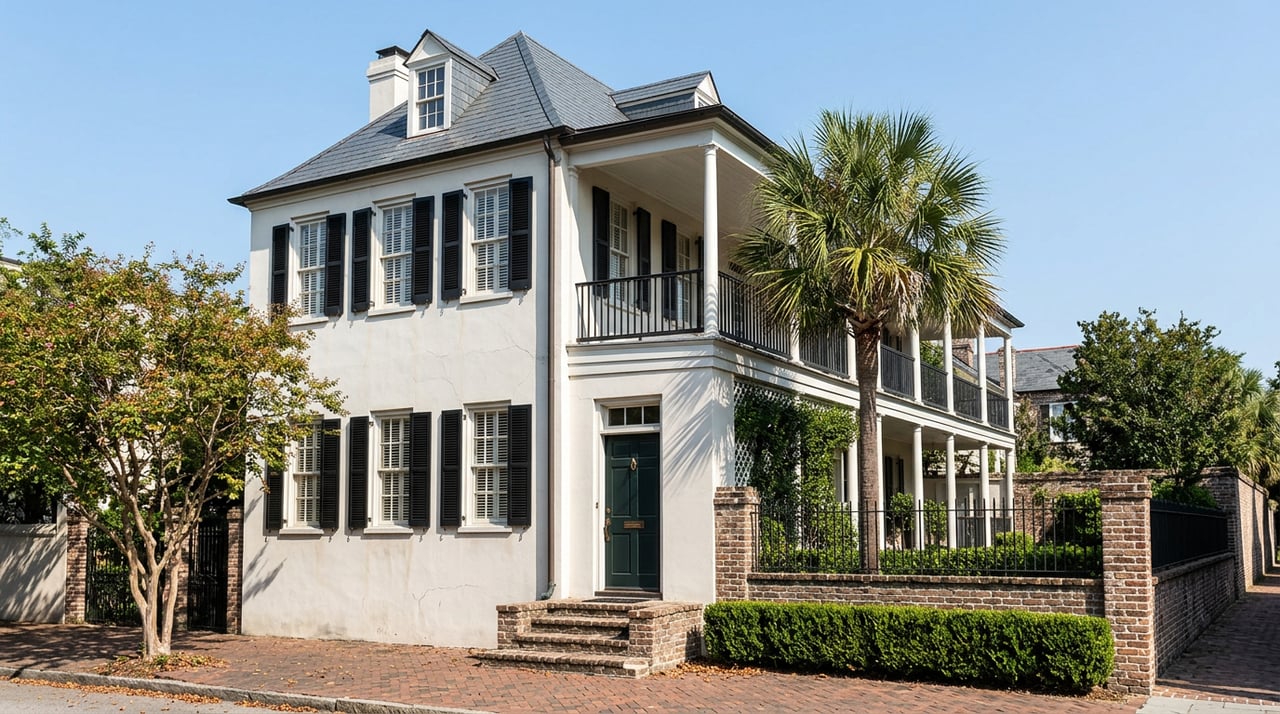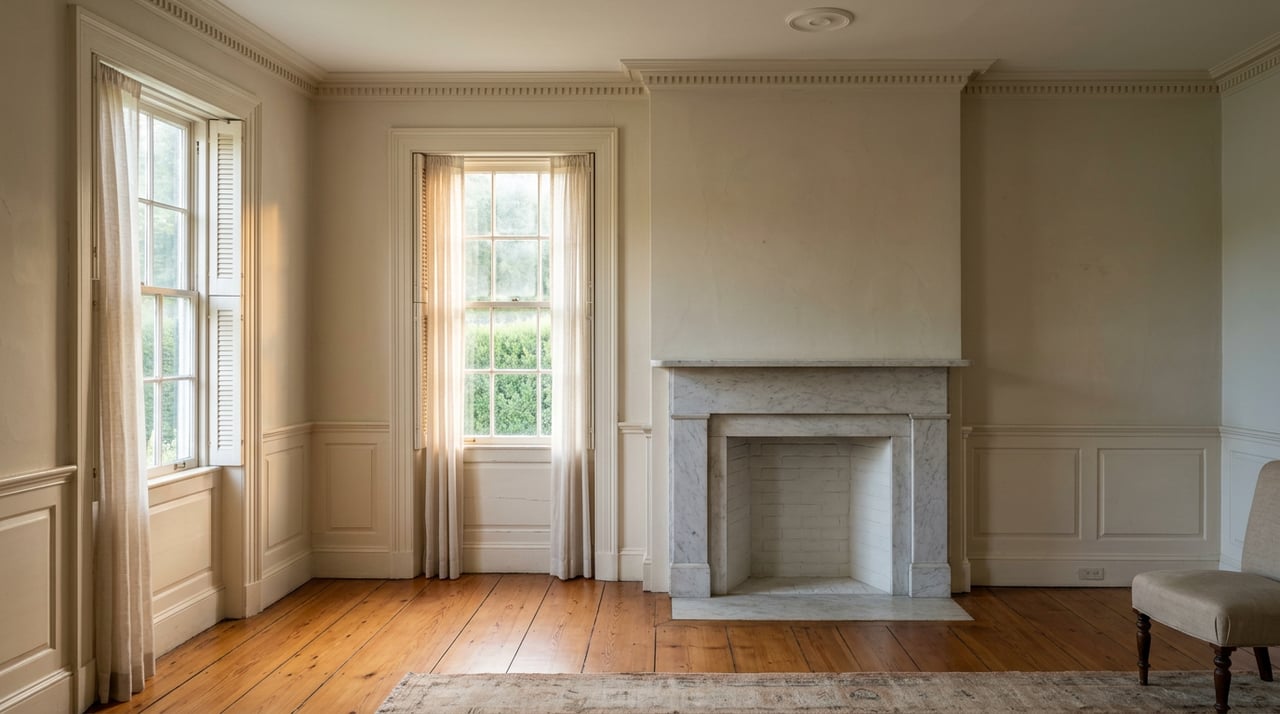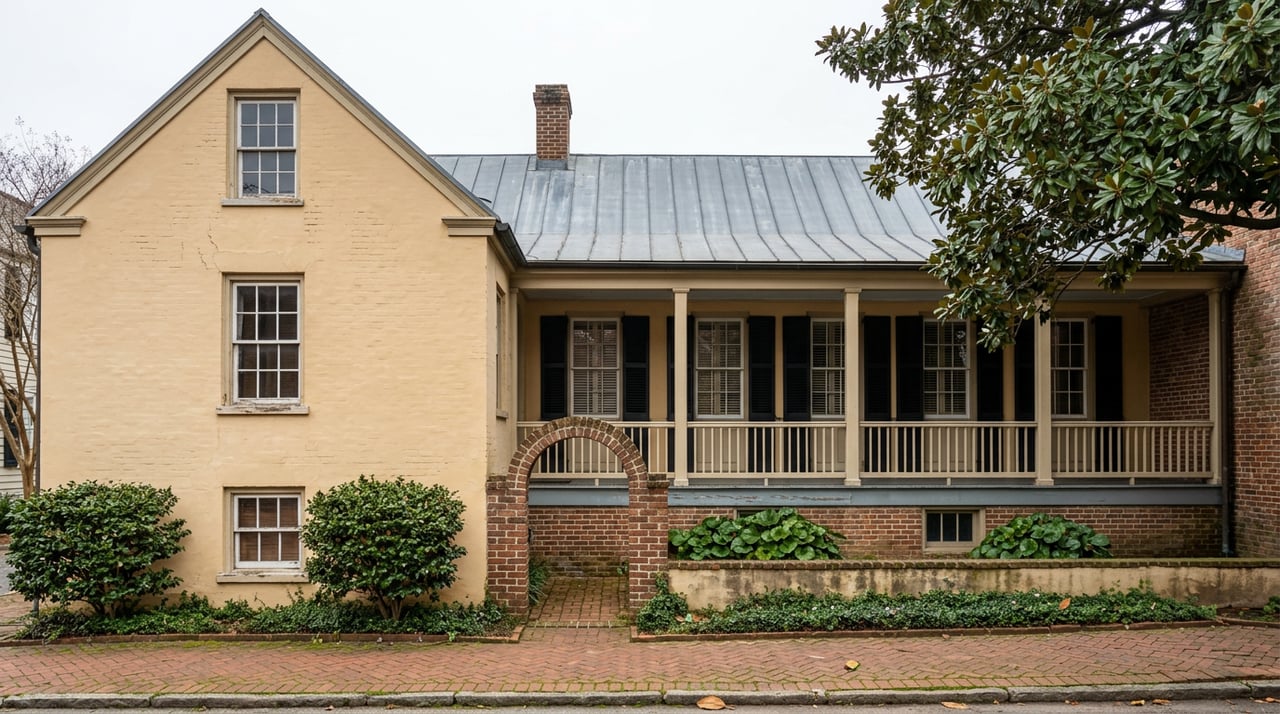
Would the renovation you're picturing for a South of Broad double house get approved three blocks north in Wagener Terrace? The honest answer is that it might, and that gap is wider than it was a year ago. Most guides to Charleston's historic preservation rules describe the Board of Architectural Review as a single, unmovable wall: buy inside the historic districts, expect maximum restriction, hire an architect who knows the drill. That description was never quite complete, and Live 5 News reported that it's noticeably out of date as of October 2025.
The city didn't rewrite the rulebook. It redrew where the strictest version of it applies. If you're comparing a peninsula purchase against a home a mile or two north, or weighing how much renovation flexibility you're actually buying alongside the architecture, that distinction is the one worth understanding before you write an offer, not after you close.
The Line That Hasn't Moved: South of Broad and the Old and Historic District
Inside the Old and Historic District, which covers South of Broad and much of the peninsula core, the Board of Architectural Review reviews nearly every exterior change visible from a public street or sidewalk: paint colors, window replacements, fences, roofing, additions, even gas lanterns and garden sheds. An April 2026 board agenda included a request for piazza stairs and a ramp on a Category 3 house dating to 1886. The following month, a Category 2 house built around 1854 sought conceptual approval for gas lanterns, a garden shed, and shutters. None of that is unusual. It's the normal texture of owning here.
What determines how much flexibility a given house has is its Category rating, a scale the city assigns from 1 to 4 based on architectural and historical significance. The rating follows the building, not the owner, and it shapes everything from how much a board will negotiate on a window profile to how a flood-zone renovation gets handled, a distinction spelled out further down.
As Live 5 News reported, the board does not weigh cost as a reason to approve demolition, and a recent case made that explicit. In November 2025, the board unanimously denied a request to demolish 30 Blake Street, the deteriorating house tied to master blacksmith Philip Simmons, despite acknowledgment from preservation advocates that restoring it would carry real expense. A preservation advocate with the Preservation Society of Charleston stated plainly that the cost of rehabilitation isn't something the board can factor into its assessment of a building's cultural and architectural significance.
The same review board has existed since 1931, when Charleston adopted the first historic preservation ordinance in the country, and it still runs on a structure that reflects that seriousness: five members and two alternates, required to include two registered architects, an attorney, a construction or engineering professional, and a layperson, each serving three-year terms with a two-term limit. This isn't a volunteer committee rubber-stamping paint swatches. It's a standing body built to make the same kind of judgment call it made on Blake Street.
The Line That Just Moved: North of the Old and Historic Core
Here's what most current guides miss. Before last fall, the board's demolition review authority extended into neighborhoods like Wagener Terrace, North Central, and Hampton Park under a rule that applied to any structure 50 years or older sitting between Line Street and Mount Pleasant Street. Residents in those areas had pushed back, arguing the layered oversight made ordinary renovation harder than it needed to be for houses that, while old, sit outside the peninsula's most protected core. City Council approved an update loosening that authority in October 2025.
The result is a real regulatory gradient rather than a single line. A Category 1 house on Tradd Street and a century-old bungalow in Wagener Terrace both fall under some form of historic oversight, but they are no longer operating under equivalent friction. If your search radius spans both South of Broad and the neighborhoods just north of the historic core, you're not comparing two versions of the same rule. You're comparing two different regulatory environments that happen to sit inside the same city.
| Old and Historic District (South of Broad, peninsula core) | Wagener Terrace, North Central, Hampton Park (post-October 2025 update) | |
|---|---|---|
| Exterior changes visible from the street | Board or staff review required, virtually no exceptions | Same requirement remains in place |
| Demolition of buildings 50+ years old | Full board review, cost is not a valid defense | Demolition review authority was scaled back in the October 2025 update |
| Typical Category ratings encountered | Concentration of Category 1 and 2 (Exceptional/Excellent) | More mixed, including unrated and lower-numbered structures |
| Recent precedent | 30 Blake Street demolition denied outright, Nov. 2025 | Residents cited the prior rule as a barrier to routine renovation before the change |
Where FEMA and the BAR Collide
Flood elevation adds a second gradient that runs parallel to Category ratings, and it matters more on the peninsula than almost anywhere else in the metro. Many historic homes here sit at their original grade in a flood zone, which makes flood-related requirements relevant to renovation planning. The city's own elevation design guidelines split the response by Category. Category 1 buildings, labeled Exceptional, and Category 2 buildings, labeled Excellent, both require full board approval for elevation, and the guidelines explicitly encourage applicants to pursue a FEMA variance that minimizes the height change needed to avoid the flood hazard, rather than a full elevation, precisely because raising a highly rated historic house changes the thing that made it rateable in the first place. Category 3 and 4 buildings have more room to work with: elevating three feet or less can be approved at the staff level, and anything beyond that requires a full board hearing.
Practically, this means a flood-exposed Category 1 house near the Battery and a Category 4 house a few blocks away can face genuinely different paths to the same flood mitigation goal, even if they sit in the identical flood zone. That's not a detail most renovation checklists spell out, and it's exactly the kind of thing worth confirming with a preservation-savvy architect before a flood insurance quote or a contractor's bid becomes the basis for an offer.
The Timing Friction Nobody Budgets For
Even routine applications move on the board's calendar, not the buyer's. BAR-Small handles most residential projects under 10,000 square feet and meets on the second and fourth Thursdays of the month, while BAR-Large, reserved for construction or renovation above that threshold, requires a full public hearing. This past summer, the regular BAR-Small agenda for the July 9, 2026 meeting filled entirely, pushing new applicants to the next available slot on July 23 with a submission deadline of July 6 at noon. That kind of backlog isn't rare. It's a predictable seasonal pattern worth building into any renovation timeline for a peninsula purchase, particularly if a closing date or a contractor's schedule depends on getting in front of the board sooner rather than later.
What This Means Before You Offer
The most expensive mistake in this process isn't a denied application. It's falling for a house, mentally spending on a renovation, and discovering the Category rating or the district boundary doesn't support the plan. Verifying a property's Category, its district, and any prior BAR history before you're under contract is the single move that prevents that outcome, and it takes a phone call to the Planning and Preservation Department or a look at the board's public agendas, not a specialist's retainer.
A Few Questions Worth Asking Before You Look at Houses
What should I check before planning interior renovations? The property's restrictions are worth checking before planning interior work.
Does cost make demolition easier to approve? The Philip Simmons House case answered that directly. Cost is not a factor the board weighs when assessing a building's architectural or cultural significance.
Are the rules the same everywhere labeled "historic Charleston"? No, and that's the point of this piece. The Old and Historic District carries the tightest and most consistent restrictions. Areas like Wagener Terrace, North Central, and Hampton Park operate under a lighter demolition-review standard as of the October 2025 ordinance change, even though exterior review for visible changes still applies broadly.
Buying a historic Charleston property means buying into a regulatory environment as much as an address, and that environment isn't uniform across the map the way most renovation guides imply. If you're weighing a South of Broad double house against something a little further north, or trying to figure out what a specific Category rating actually allows before you write an offer, Oyster Point Real Estate Group can walk the property's BAR history with you before it becomes a surprise after closing. Contact us.
This article is general information, not legal, tax or financial advice. Consult a qualified professional about your situation.